Some materials loop almost endlessly. Others barely loop at all. The gap is where our members work.
Each row says exactly what it measures, because recycling statistics are reported differently by every sector. Follow the source link before you quote a number.
Construction & demolition debris sent to next useUnited States, 2018: about 455 of 600 M tons~76%US EPA, C&D debris facts and figures
Rates are not directly comparable: some measure collection, some measure recycling, one measures material still in circulation. The ranking is a prompt to look closer, not a league table.
Eight material streams, one network
Construction and demolition is where we started. Members now recover everything from fibre to lithium. Pick a stream.
Construction & demolition
The heaviest waste stream in most economies. Crushed concrete, asphalt, metals, timber and gypsum can almost all go back into the next build.
600M
tons of C&D debris generated in the US in 2018, more than twice its municipal waste. In the EU, construction makes up 38.4% of all waste.
IMARC values the GCC C&D recycling market at USD 7.9 bn in 2024, heading to USD 12.3 bn by 2033. Sharjah's BEEAH processes about 500,000 tonnes of C&D waste a year. More on our core stream
Textiles & fashion
Fashion's loop is the most broken of all. Sorting by fibre, then fibre-to-fibre recycling, is where the next decade of investment is going.
<1%
of the material used to make clothing is recycled into new clothing. Roughly 92 million tonnes of textile waste are produced every year.
EU countries must collect textiles separately since 1 January 2025. The revised Waste Framework Directive, in force since 16 October 2025, adds producer responsibility schemes by April 2028. Brands and traders supplying Europe from the region will feel it. European Commission
Plastics & packaging
Clean, single-polymer streams such as PET bottles recycle well. Films, multilayers and mixed plastics are the hard part, and the reason regulation is tightening.
9%
of plastic waste was ultimately recycled worldwide in 2019. Almost half went to landfill and 22% was mismanaged.
Single-use plastic bags were banned nationwide from 1 January 2024. Phase two, from 1 January 2026, covers cups, lids, cutlery, plates, straws, stirrers and polystyrene food containers. Economy Middle East
Electronics
The fastest-growing waste stream, and one of the richest. Circuit boards carry copper, gold, silver and palladium; batteries and refrigerants need careful handling.
62 Mt
of e-waste generated in 2022, only 22.3% documented as properly collected and recycled. The forecast for 2030 is 82 Mt.
E-waste is rising five times faster than documented recycling. Collection, not processing capacity, is usually the bottleneck, which makes take-back schemes and data the priorities.
Metals
Metals are the proof that circularity works at scale. They can be remelted again and again, and scrap is a traded commodity everywhere in the region.
~75%
of all aluminium ever produced is still in use. Steel is the world's most recycled material, with about 680 Mt recycled in 2021.
EGA's recycling plant at Al Taweelah, the largest in the country, can process 185,000 tonnes of aluminium scrap a year. EGA
Glass
Container glass can be remelted indefinitely without losing quality. Crushed cullet melts at a lower temperature than raw materials, so every tonne saves furnace energy.
80.8%
of container glass was collected for recycling in the EU in 2023. The recycling rate, a stricter measure, was 74.9%.
Colour sorting and clean collection decide whether glass goes back into bottles or down to aggregate. Hospitality-heavy cities generate dense, collectable streams.
Paper & cardboard
E-commerce has made corrugated cardboard one of the most valuable recyclables in the city. Fibre can be recycled several times before it gets too short.
75.1%
of paper was recycled in Europe in 2024, and 83.1% of paper packaging. The 2030 target is 76%.
Keeping fibre dry and free of food contamination at the source is worth more than any sorting line. Commercial cardboard collection is the quickest win.
Batteries & EV
As EVs and grid storage scale up, end-of-life batteries become a source of lithium, nickel and cobalt. Europe has already written recovery targets into law.
80%
of lithium must be recovered from waste batteries by the end of 2031 under EU Regulation 2023/1542, up from 50% by the end of 2027. Cobalt, copper, lead and nickel: 95%.
From August 2031, new EU batteries must contain at least 16% recycled cobalt, 85% lead, 6% lithium and 6% nickel. Supply chains feeding Europe need traceable recycled material.
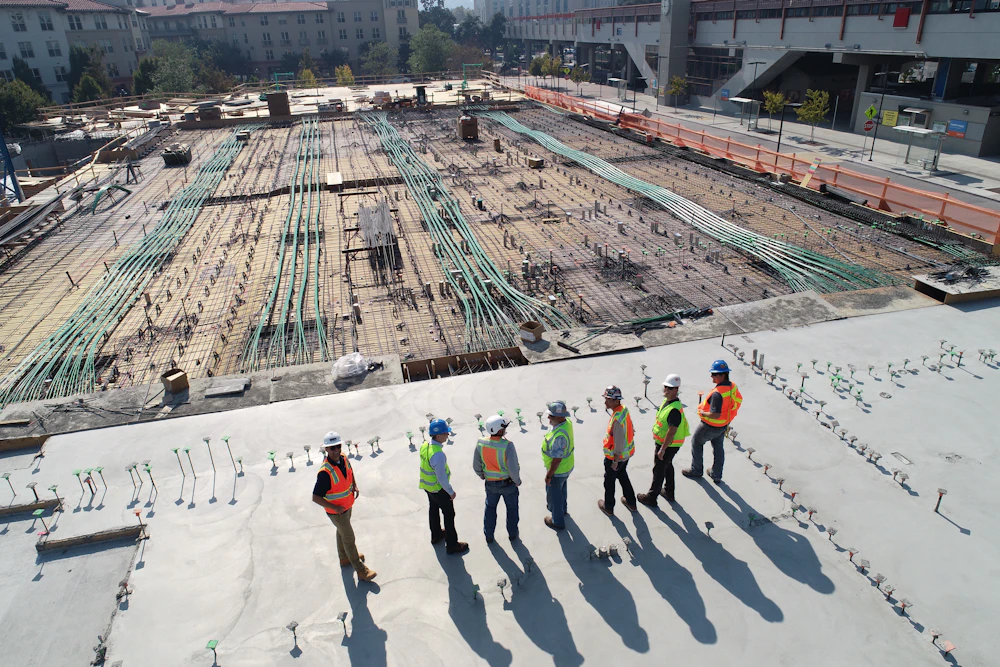
C&DEvery demolition is a materials mine. The question is how much of it reaches the next site.
Construction is still our core
CDRA Middle East grew out of the construction and demolition recycling community, the regional chapter of the Construction & Demolition Recycling Association. Knowing what is in the stream is where recovery starts.
Concrete & aggregates42%
Asphalt16%
Wood14%
Drywall & plaster10%
Metals8%
Other10%
Indicative mix by weight. Actual composition varies by project, building age and country.
USD 12.3 bnGCC C&D recycling market forecast for 2033, from 7.9 bn in 2024IMARC Group
USD 1.47 bnUAE construction waste management market forecast for 2031Mordor Intelligence
38.4%of all waste in the EU comes from construction (2022)Eurostat
500,000tonnes of C&D waste processed a year at BEEAH's Sharjah facilityKhaleej Times
The rules are moving. Here's the calendar.
Gulf deadlines, plus the European rules that reach regional exporters. Highlighted entries are in the region.
UAE
Circular Economy Policy 2021–2031
Priorities: green infrastructure, sustainable transport, manufacturing, and food production and consumption.
Your voice in legislation and regulation on recycling across the GCC and the wider region.
Research & data
Market studies, regulatory profiles and benchmarks across all eight material streams.
Networking & events
Conferences, chapter meetings and site visits with recyclers, contractors, brands and regulators.
Education
Webinars, certification programmes, safety training and professional development.
Recognition
Member credentials, a directory listing, letters of confirmation and annual industry awards.
Member rates
Reduced fees for conferences, certification audits, training and partner services.
Membership is earned, not bought
We admit only the top 5% of the industry: proven professionals and organisations with verifiable results in their stream. Every application is reviewed by an independent Selection Committee of industry leaders, academics and former regulators.
Corporate
For organisations working in recycling, waste management, construction or manufacturing.
Registered entity operating in the Middle East
A named representative for the association
Commitment to the CDRA code of practice
Committee review of activities and references
Professional
Most applicants
For individuals with a proven record in any recycling stream.
At least 5 years of professional experience in recycling or a related field
A leadership role in at least 3 significant industry projects
Two references from recognised industry peers
Evidence of original contributions: publications, patents or innovations
Interview with the Selection Committee
Fellow
By nomination
The association's highest grade, for sustained, recognised impact.
At least 10 years of sustained professional achievement
Nomination by two Fellows or Board members
Leadership in major regional or international initiatives
Published research or widely adopted innovations
Full Selection Committee review and vote
How selection works
Application
Submit your professional background, CV and supporting documents online.
Screening
Staff check completeness and basic eligibility, and contact your references.
Committee review
The independent Selection Committee assesses you against the published criteria.
Interview
Professional and Fellow candidates meet committee members by video call.
Decision
You hear back within 6 to 8 weeks. Successful applicants are invited to register.
3Industry leadersSenior executives from recycling companies
3Academic expertsProfessors from regional universities
3Former regulatorsRetired government officials
Top5%
Of the industry
We admit only the top 5% of professionals and organisations in their stream. The committee meets quarterly and decides on merit alone.
Application deadlines
Q4 202615 December
Q1 202715 March
Q2 202715 June
Q3 202715 September
Good to know
Applications must be submitted in English.
The application fee is non-refundable.
References must come from non-affiliated professionals.
Unsuccessful applicants may reapply after one year.
Apply for membership
Four short steps, about 15 minutes. Your answers go straight to the Selection Committee.
We don't admit everyone.
CDRA Middle East is for proven professionals and organisations: the people who already recover materials at scale, design products that come back, and shape the rules that make it possible.
We admit only the top 5% of the industry. If you are among the best in your stream, we want you in the room, because a cleaner, more efficient region is built by the people who actually do the work.
Have these ready
Your LinkedIn profile and company website
One project with measurable results
Two references from non-affiliated professionals
Optional: CV or company profile as a PDF
Your details are used only to assess your application and are never shared without consent. Progress is saved in this browser until you submit.
Latest from the field
Selected news across the streams we cover. Links open the original publisher.
CDRA Middle East is the regional chapter of the Construction & Demolition Recycling Association. The global association's site has industry resources, events and member services.